
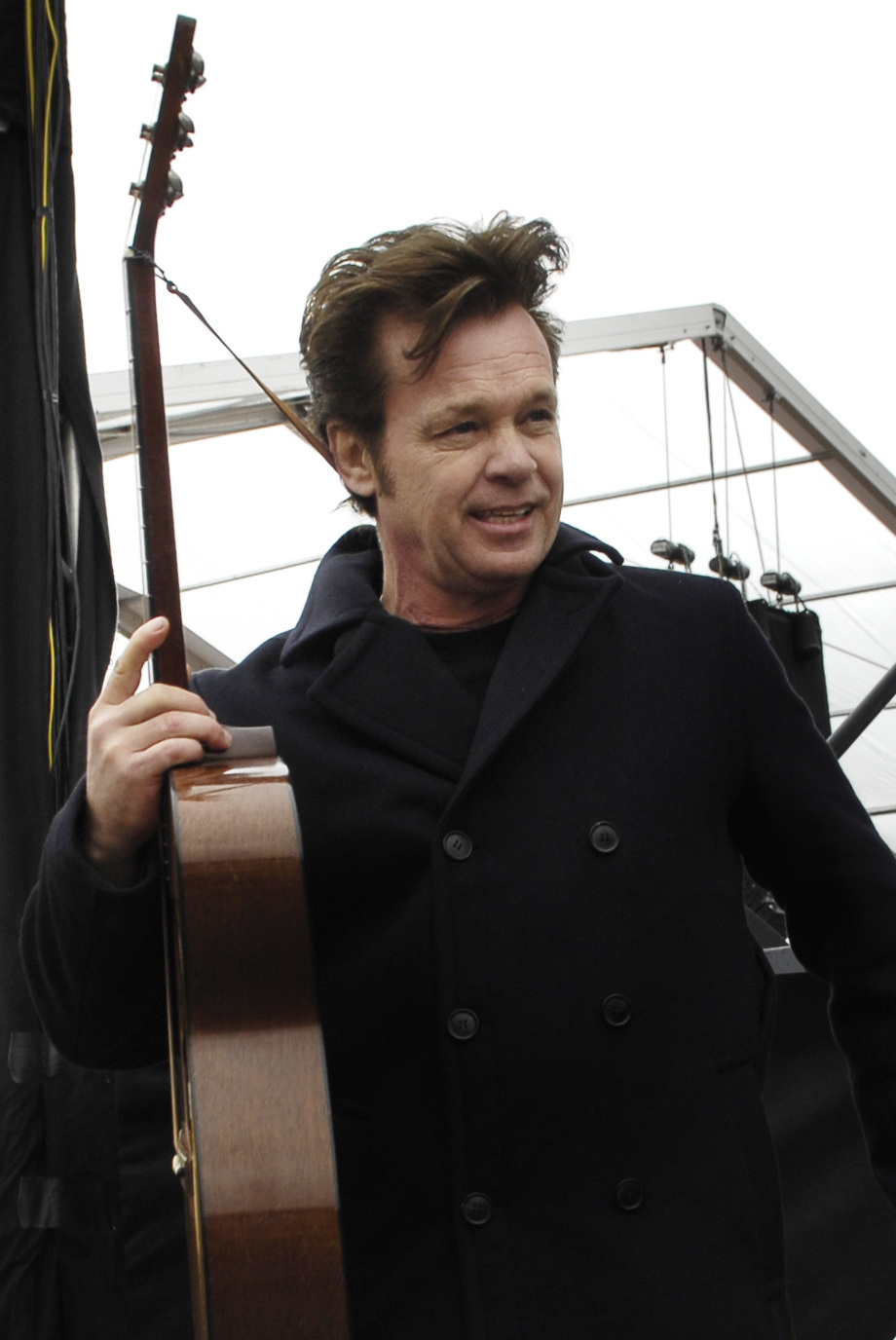
The creative travel of John Mellencamp resists simple categorization. Known broadly as a voice of the Midwest through his music, Mellencamp has spent decades crafting melodies that resonate with raw authenticity, social consciousness, and passionate depth. However, to characterize him exclusively as a performer would be to ignore a noteworthy aspect of his inventive character. Past the arrangement and recording studio, Mellencamp has developed a parallel life as a painter—one similarly committed to investigating the human condition, though communicated through brushstrokes rather than chords.
His world is one where sound and color cross, where songs drain into visual surfaces, and where the same eager interest drives both shapes of expression. To get it, Mellencamp completely investigates the relationship between his music and his depictions, and how each teaches the other click here.
Roots in the American Heartland
Born in Seymour, Indiana, Mellencamp’s childhood played a significant part in forming his imaginative voice. The small-town environment, with its calm rhythms and unvarnished substances, became the setting for his narration. His melodies regularly revolve around conventional people—factory laborers, ranchers, small-town dreamers—presented with sympathy rather than romanticism.
Albums like “American Fool” and “Scarecrow” set him up as a chronicler of American life. Tracks such as “Jack & Diane” and “Pink Houses” became social touchstones, not just because of their catchy songs, but because they captured something profoundly recognizable. What recognized Mellencamp early on was his refusal to glamorize. His America was not one or the other idealized nor completely bleak—it was genuine, imperfect, and lively. This same sensibility would afterward carry over into his visual art.
The Melodic Dialect: Coarseness, Beat, and Truth
Mellencamp’s music is frequently described as “heartland rock,” a term that links him with artists like Bruce Springsteen and Tom Petty. However, Mellencamp’s approach has continuously been interesting in his claim. Where Springsteen inclines toward clearing stories and Negligible toward jangly, melodic shake, Mellencamp’s sound is stripped down, nearly angry in its simplicity.
His melodies depend intensely on rhythm—often borrowing from society, blues, and early shake conventions. The instrument tends to be both inadequate and deliberate, allowing the verses to take center stage. Over time, his voice itself became a defining instrument: weathered, flawed, and unmistakably human.
Themes in his music regularly touch on:
Economic hardship and a constant struggle
The disintegration of small-town values
Personal connections are checked by pressure and resilience
Social and political critique
These subjects evolved as Mellencamp matured, becoming more intelligent and, at times, darker. Collections like “The Phantom Brothers of Darkland County” illustrate his eagerness to test with an account frame and dramatic elements.
The Turn Toward Painting
While the 1980s well established Mellencamp’s melodic career, his genuine engagement with portray has risen since then. What started as an individual investigation slowly became a critical aesthetic interest. Not at all like numerous celebrities who fiddle with visual craftsmanship, Mellencamp draws near portrayal with teach and intensity.
His work is frequently compared to German Expressionism, especially to artists such as Max Beckmann and Otto Dix. The comparison is not shallow. Mellencamp’s canvases share a comparative rawness—distorted figures, overwhelming lines, and a quieted palette that emphasizes passionate weight over tasteful polish.
His subjects are regularly human figures, rendered in ways that highlight powerlessness, pressure, and, sometimes, distress. Faces appear stretched or split; bodies are often rigid or cumbersome. There is a small endeavor to improve. In “Step on Me, Mellencamp expects an expectation of uncovering something deeper—perhaps seeks truths he looks for in his music.
Themes in Visual Art
Mellencamp’s depictions, much like his tunes, are established in perception. However, where his music tells stories, his works of art inspire dispositions and mental states. Repeating subjects include:
-
Segregation and Identity
Many of his representations convey a sense of isolation. The subjects show up contemplative, indeed detached. This echoes the passionate undercurrents of melodies like *Little Town*, where having a place and restriction coexist.
-
Imperfection
Mellencamp does not endeavor for authenticity in the conventional sense. In a step, he grasps twisting. This approach recommends that truth lies not in cumulative representation but in passionate authenticity.
-
Social Commentary
Just as his music studies societal structures, his canvases frequently imply broader issues—alienation, imbalance, and the entry of time. The absence of foundation detail in many workplaces shifts the focus unequivocally to the person, as if to say the individual is indivisible from the political.
The Crossing Point of Music and Painting
What makes Mellencamp’s double career captivating is not essentially that he exceeds expectations in two areas, but that the two are profoundly interconnected. His works of art are not an elude from music; they are an expansion of the same inventive impulse.
For more information check now.
Rhythm vs. Composition
In music, Mellencamp builds cadence through percussion and expression. In painting, cadence appears through the repetition of lines, shapes, and colors. There is a visual cadence to his work, a sense that the eye moves over the canvas much as the ear follows a melody.
Narrative vs. Suggestion
Songs regularly require structure—verses, choruses, a clear movement. Depictions, on the other hand, permit equivocalness. Mellencamp employs this flexibility to explore ideas that may not fit perfectly into lyrics.
Emotional Continuity
Whether through a melody or a portrayal, Mellencamp’s objective remains steady: to inspire a reaction. The mediums vary, but the passionate center is the same.
Influences Past Music
Mellencamp’s creative sensibility has been shaped by a wide range of influences, not confined to music. Writing, film, and visual craftsmanship have all played a part in his development. He has communicated deference for journalists who center on the human condition with determined trustworthiness. This scholarly impact is apparent in his songwriting, which regularly peruses like brief stories set to music.
In his portrayals, his deference to European innovators is clear. The passion of Expressionism aligns with his desire to strip away superficial layers and confront deeper truths.
Public Gathering and Basic Perspective
Mellencamp’s move into portraying was at first met with skepticism. It is not unprecedented for people to gather to discuss whether a fruitful artist can be taken seriously in another aesthetic field. In any case, over time, his work has gained recognition for its claim. Presentations of his canvases have drawn consideration not because of his popularity, but because of their particular voice. Pundits have praised the truthfulness of his approach—there is no sense that he is portrayed for oddity or glory. In step, his work reflects a veritable requirement to create.
Similarly, his music has continued to advance, resisting the temptation to rely on past triumphs. This eagerness to develop, indeed at the risk of alienating a few fans, speaks to his keenness as an artist.
Collaboration and Activism
Another measurement of Mellencamp’s career is his association with social causes. He is a co-founder of Cultivate Help, near Willie Nelson and Neil Young. The activity was created to support American farmers facing financial hardship. This commitment to activism aligns with the themes in both his music and his depictions.
Aging and Aesthetic Evolution
As Mellencamp has developed more seasoned, his work has taken on modern measurements. His voice has extended, both truly and allegorically. Later music reflects a more reflective tone, linking with mortality, bequest, and the entry of time.
His depictions have advanced as well. Whereas early works may have centered more on method and investigation, later pieces display greater confidence and cohesion. There is a sense that Mellencamp has found a visual dialect that feels true to him. This advancement is not merely a refinement in the conventional sense, but rather a focus on trustworthiness. Mellencamp appears less concerned with how his work is seen and more centered on what it expresses.
The Significance of Authenticity
One of the defining characteristics of Mellencamp’s career is his commitment to realism. This is apparent in his refusal to adjust to industry desires, whether in music or art.
In a period where pictures frequently take priority over substance, Mellencamp’s work stands out for its explicitness. He does not endeavor to display himself as something he is not. In a single step, he grasps his roots, his flaws, and his perspective. This realness resonates with onlookers because it feels genuine. It welcomes audience members and watchers to lock in not with the work, but with the individual behind it.
Legacy and Social Impact
Mellencamp’s impact extends beyond his personal accomplishments. As an artist, he made a difference by characterizing a class and giving voice to experiences often neglected in mainstream culture. As a painter, he has illustrated that imaginative expression need not be confined to a single medium.
His bequest is not a fair collection of tunes or canvases, but a body of work that reflects a lifetime of perception, reflection, and creation. It challenges the idea that specialists must choose one way, instead recommending that imagination is fluid and multifaceted.
A Life Between Forms
To see Mellencamp exclusively through the focal point of music is to miss half the picture. To see him, as it were, as a painter is similarly restricting. His genuine character lies in the exchange between these shapes. Music gives structure, account, and quickness. Portray offers contemplation, deliberation, and lastingness. Together, they make a more total expression of his creative vision. This duality is not an inconsistency but a harmony—two distinctive dialects passing on the same fundamental truths.
Conclusion
The world of John Mellencamp is one marked by profundity, authenticity, and a tireless drive to create. Whether through the driving rhythms of his melodies or the stark symbolism of his depictions, he seeks to capture something basic about the human element. His travels remind us that craftsmanship is not bound to a medium. It is a way of seeing, of addressing, of interfacing. Mellencamp’s capacity to move between music and portrayal with such conviction speaks to a broader truth: that imagination, at its center, is almost an expression in any frame that feels necessary.
In a career crossing decades, he has remained committed to that guideline. And in doing so, he has built a body of work that is as different as it is unified—a confirmation of the control of living and creative life without boundaries.
0





Leave a Reply