
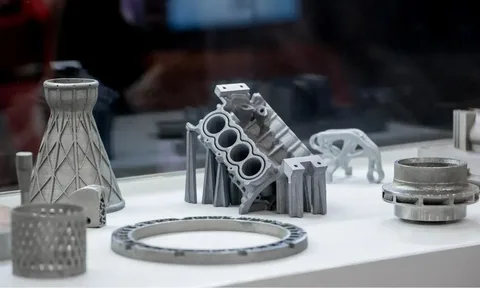
Metal additive manufacturing has transformed how industries design and produce complex components. Unlike traditional subtractive methods, metal 3D printing services build parts layer by layer, allowing for highly intricate geometries that were once impossible or too expensive to manufacture. This shift is reshaping sectors such as aerospace, automotive, medical, and industrial engineering.
Modern manufacturing demands faster turnaround times, reduced material waste, and greater design freedom. Metal 3D printing meets these needs by enabling engineers to prototype and produce end-use parts in a single streamlined process. As a result, companies are increasingly relying on this technology to stay competitive in high-performance markets.
- Enables complex and lightweight geometries
- Reduces material waste compared to machining
- Supports rapid prototyping and production scaling
- Ideal for aerospace, automotive, and medical industries
The rise of metal 3D printing services is also driven by improvements in powder metallurgy, laser precision, and software-driven design optimization. These advancements ensure stronger, more reliable components that meet strict industrial standards.
Key Technologies Behind Metal 3D Printing
The success of metal additive manufacturing depends heavily on the technologies used in the printing process. The most common methods include Selective Laser Melting (SLM), Direct Metal Laser Sintering (DMLS), and Electron Beam Melting (EBM). Each technique offers unique advantages depending on material type and application requirements.
These technologies use high-powered lasers or electron beams to fuse metal powder into solid structures. This precision allows manufacturers to achieve exceptional accuracy and repeatability, making metal 3D printing services suitable for critical engineering applications.
- SLM: Produces fully dense metal parts with high strength
- DMLS: Ideal for complex industrial-grade components
- EBM: Best for high-temperature resistant materials
- Powder bed fusion ensures precision and structural integrity
Another key advantage is digital control. Engineers can modify designs quickly without retooling, significantly reducing development time. This flexibility is especially valuable in industries where innovation cycles are short and performance demands are high.
Applications in High-Performance Industries
High-performance industries are among the biggest adopters of metal additive manufacturing. Aerospace companies, for example, use metal 3D printing services to create lightweight yet durable engine components, reducing fuel consumption and improving efficiency. Similarly, automotive manufacturers use it to develop performance parts with optimized aerodynamics.
In the medical field, metal 3D printing is used to produce custom implants and surgical tools tailored to individual patients. This level of personalization improves patient outcomes and reduces recovery time. Industrial sectors also benefit by producing durable tooling and replacement parts on demand.
- Aerospace: turbine blades, brackets, and structural parts
- Automotive: lightweight engine and performance components
- Medical: implants, prosthetics, and surgical instruments
- Industrial: tooling, molds, and spare parts production
The ability to produce high-performance, application-specific components is one of the main reasons demand for metal 3D printing services continues to grow globally.
Benefits of Using Metal 3D Printing Services
One of the biggest advantages of metal additive manufacturing is design freedom. Engineers are no longer restricted by traditional machining limitations and can create optimized structures that improve performance while reducing weight. This leads to more efficient and cost-effective products.
Additionally, production efficiency is significantly improved. With fewer manufacturing steps, companies can reduce lead times and bring products to market faster. This is especially valuable in competitive industries where speed and innovation are key.
- Greater design flexibility and geometric complexity
- Reduced production time and faster prototyping
- Lower material waste and improved sustainability
- Cost savings in low to medium production volumes
Another important benefit of metal 3D printing services is the ability to produce parts on demand. This reduces the need for large inventories and allows businesses to manufacture only what is needed, when it is needed, improving supply chain efficiency.
Quality Control and Material Performance
Quality control is a critical aspect of metal additive manufacturing. Leading providers of metal 3D printing services use advanced inspection techniques such as CT scanning, surface analysis, and mechanical testing to ensure each part meets strict industry standards.
Material performance is equally important. Common metals used include titanium, stainless steel, aluminum, and nickel alloys. These materials are chosen for their strength, heat resistance, and corrosion resistance, making them suitable for demanding applications.
- Non-destructive testing ensures structural integrity
- Precision calibration maintains consistent output quality
- High-performance alloys for demanding environments
- Compliance with aerospace and medical certifications
Post-processing techniques such as heat treatment, polishing, and CNC finishing further enhance part quality. These steps ensure that components not only perform well but also meet aesthetic and functional requirements.
Conclusion
The rise of metal 3D printing services has revolutionized modern manufacturing by enabling the production of high-performance, complex, and lightweight components across multiple industries. From aerospace and automotive to medical and industrial applications, this technology continues to push the boundaries of what is possible in engineering and design.
As advancements in printing technology, materials, and quality control continue, metal additive manufacturing will become even more efficient and accessible. Companies that adopt these solutions early will gain a strong competitive advantage in innovation, production speed, and cost efficiency.