
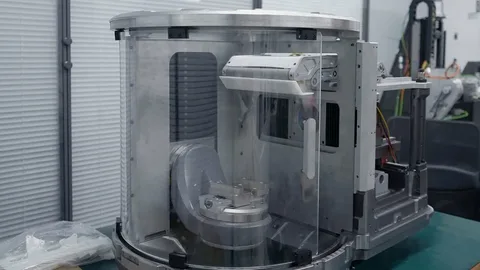
Selecting the right partner for manufacturing begins with a clear understanding of your project requirements. 5 axis machining is a highly advanced manufacturing process that allows complex parts to be produced in a single setup with extreme precision. Before choosing a provider, it is essential to define your material type, tolerance levels, production volume, and design complexity.
A reliable provider should demonstrate how their 5 axis machining capabilities align with your engineering goals. This ensures fewer production errors, reduced lead time, and improved surface finish quality for intricate components.
- Define part geometry complexity and tolerances
- Identify material requirements (aluminum, steel, titanium, etc.)
- Confirm production volume needs (prototype vs mass production)
- Evaluate whether single-setup machining is necessary
- Assess compatibility with CAD/CAM design files
Understanding these fundamentals helps you filter out providers who may not be fully equipped for advanced machining tasks. Many manufacturers claim capability, but only a few can consistently deliver high-precision 5 axis machining results across diverse industries such as aerospace, automotive, and medical engineering.
Evaluating Technical Capabilities and Equipment
One of the most critical factors in choosing a provider is the quality and sophistication of their machinery. Modern 5 axis machining requires advanced CNC systems that can operate on multiple axes simultaneously with tight synchronization and stability. The more advanced the machine tools, the higher the accuracy and efficiency of production.
It is also important to assess whether the provider invests in updated technology and software. Leading shops use advanced simulation tools and high-speed machining centers that minimize vibration and tool wear while maximizing output quality.
- Check machine models and manufacturing brands used
- Verify simultaneous 5-axis movement capability
- Assess CAD/CAM software integration (e.g., Siemens, Mastercam)
- Look for automation and robotic support systems
- Confirm maintenance and calibration schedules
A provider with strong technical infrastructure can significantly reduce production risks. In 5 axis machining, even a minor mechanical inaccuracy can lead to costly defects, so equipment quality directly influences final product performance and reliability.
Assessing Experience and Industry Expertise
Experience plays a vital role when selecting a 5 axis machining service provider. Companies with years of hands-on expertise are better equipped to handle complex geometries, tight tolerances, and challenging materials. They also understand industry-specific requirements that newer firms may overlook.
A seasoned provider can offer valuable engineering insights during the design and manufacturing process. This collaborative approach ensures that parts are optimized for manufacturability without compromising functionality.
- Review portfolio of completed projects
- Check industry specialization (aerospace, automotive, medical)
- Evaluate years of experience in CNC and 5-axis operations
- Ask for case studies or client references
- Assess problem-solving capability for complex designs
Expertise in 5 axis machining also reduces trial-and-error in production. Skilled machinists and engineers can anticipate machining challenges early, saving time and cost while ensuring superior product quality.
Quality Control and Precision Standards
Quality assurance is a non-negotiable factor when dealing with 5 axis machining projects. Because these components often serve critical applications, even the smallest deviation can lead to system failure or performance issues. A trustworthy provider should follow strict inspection protocols and international quality standards.
Advanced inspection equipment such as CMM (Coordinate Measuring Machines) and laser scanners are essential for verifying dimensional accuracy. Consistent quality checks throughout production ensure that every component meets exact specifications.
- Verify ISO certification or equivalent quality standards
- Check use of CMM and precision measuring tools
- Evaluate in-process inspection procedures
- Confirm tolerance capability (micron-level accuracy)
- Assess documentation and traceability systems
Strong quality control systems ensure that 5 axis machining outputs are consistent, reliable, and defect-free. This is especially important in industries like aerospace and medical devices, where precision is critical for safety and performance.
Cost, Communication, and Delivery Reliability
While cost is an important factor, it should never be the sole deciding element when selecting a 5 axis machining provider. Extremely low pricing may indicate compromised quality, outdated machinery, or insufficient expertise. Instead, focus on value—balancing cost with precision, reliability, and service quality.
Equally important is communication and project management efficiency. A good provider maintains clear communication throughout the production cycle and ensures on-time delivery without unexpected delays.
- Compare pricing with service quality and capabilities
- Evaluate transparency in quotations and billing
- Assess communication responsiveness and technical support
- Confirm lead times and delivery commitments
- Check flexibility for design changes or urgent orders
Reliable communication ensures smoother collaboration and fewer production errors. In 5 axis machining, where precision and timing are critical, a dependable delivery schedule can significantly impact your overall project success.
Conclusion
Choosing the right 5 axis machining service provider is a strategic decision that directly affects product quality, production efficiency, and long-term success. By carefully evaluating technical capabilities, industry experience, quality control systems, and communication practices, businesses can ensure they partner with a manufacturer capable of meeting complex engineering demands. Ultimately, the right provider delivers not only precision components but also reliability, consistency, and value that support sustainable growth in competitive industries.