
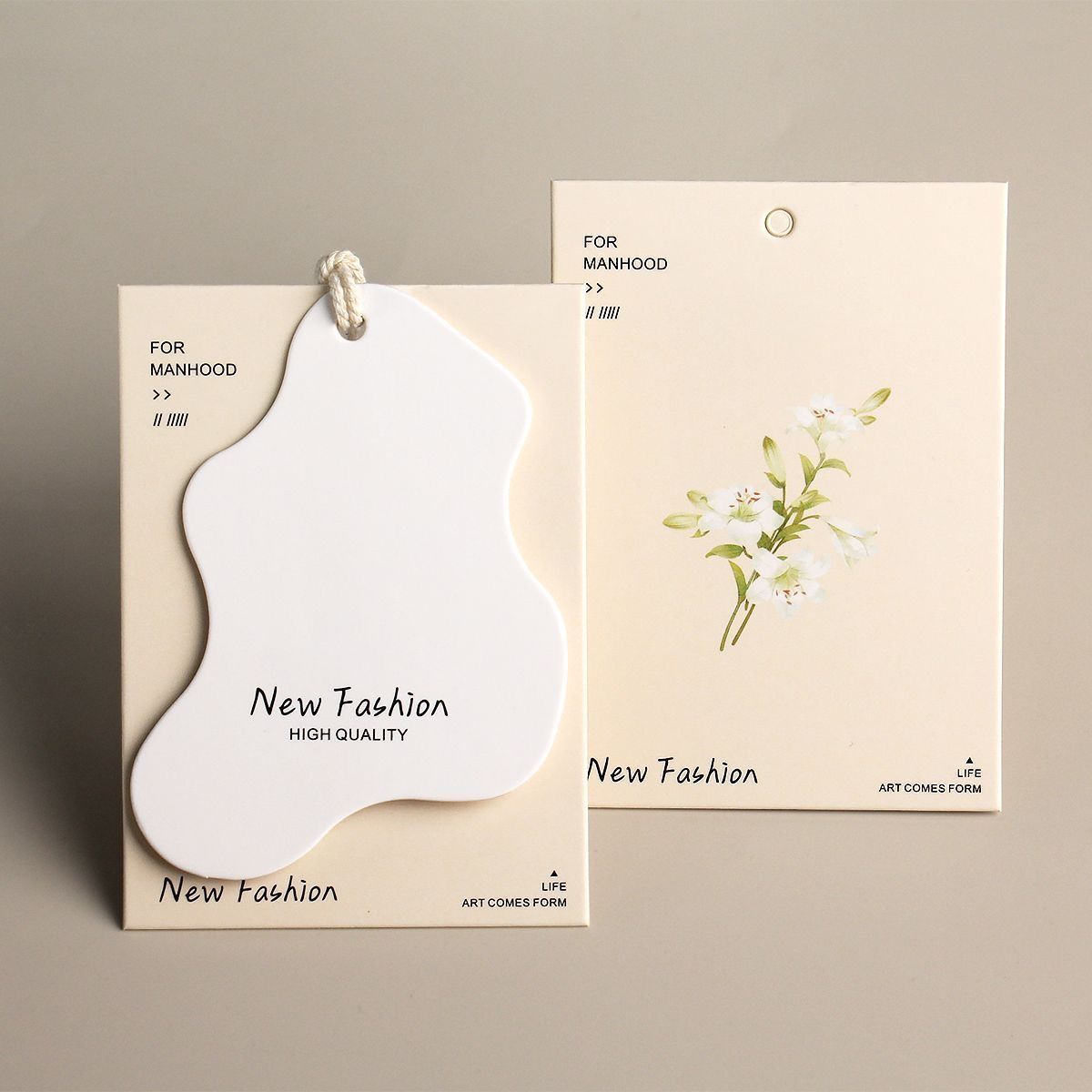
Custom die-cut tags offer a unique labelling solution, which enables brands to design their tags to suit product style and packaging needs. These tags are made not only on paper or card by precision dies, but as opposed to the normal rectangular tags, they are designed in a special shape. The finding is a tag that instantly stands out, yet one that has vital product information.
They can be used by companies to show branding, product, or collection details. Since the shapes can be custom-made to suit packaging ideas, they are blended with most of the product lines. With clothing and unique retail products, custom labels provide a classy means of conveying the brand identity through its packaging information.
Distinctive Tag Shapes
Die cutting gives the packaging designers the option to experiment with the shape of the tags that are characteristic of their products. Angled lines, rounded corners, and geometric shapes make the tag look purposeful and not generic. Numerous businesses will select custom die cut tags wholesale in cases where they need multiple shapes of tags in extensive product lines. The cutting process is precise as it guarantees that all the tags are of the same size and shape. This consistency assists the brands in having a professional packaging look in retail shelf displays. The shaped tag, when connected to garments, boxes, and accessories, is a part of the product display and not merely a label. Die cutting has the advantage of design freedom, and it is therefore possible to align tag shapes with brand symbols or themes on packaging.
Retail Branding Detail
The retail packaging is usually dependent on tiny details to convey the brand identity, and die-cut tags add to it to a large extent. Their contoured edges form an aesthetic discontinuity with the classic tags, making the packaging of the products look more refined. Custom die-cut tags UK are commonly used by international retailers to ensure the same packaging information is present throughout the stores and channels of distribution. These labels are able to hold logos, product details and ornaments in a small size. They emphasise brand identity when put on products carefully, without overshadowing the product itself. Due to the attachment with the help of the packaging strings or glues, the tag can stay in line during product transportation. This uniform positioning strengthens brand awareness in the product lines.
Advanced Printing Surfaces
A die-cut tag has its surface space, which is good for unambiguous product messaging. The text, illustration or decorative accents can be organised around the edges of the tag shape by designers. Custom printed die-cut tags allow the brand to have accurate control of the graphics’ interaction with the tag outline. Printing technology provides the ability to reproduce the colour in detail and clear typography on even complicated shapes. This allows one to show product specifications, instructions on how to configure it or offer a promotion without overloading the layout. The tags may have a purpose on each side, which means that the information will be organised and readable. The printing accuracy and die moulding make the tag a branding element of an intentional nature.
Integrated Packaging Accent
Die-cut tags are not just typical labels since they can be incorporated as part of packaging constructions. They can be based on the shape of the products, wrapping papers, or garments. Custom die-cut tag packaging is often created by businesses to align the tags with other packaging concepts. As an example, the shape of the tag can recreate a brand symbol or reflect the product box design. This coordination generates a unified packaging mechanism wherein all the parts of the packaging have a sense of belonging. This connection is often strengthened with a coordinated colour palette and material by the designers. What comes out of it is a tag that seems to be a product-specific addition instead of one that is added later.
Creative Tag Layouts
The odd shapes that are developed through die cutting also enable the designer to experiment with layout arrangements that normal tags cannot facilitate. The text may be drawn around curvy edges, and the illustrations can interact uniquely with the outline of the tag. When trying out new design strategies for new products, smaller brands tend to use custom die-cut tags with no minimum. This will enable them to perfect the style of tags without having to undertake big production batches. The formation of the tag may inform the positioning of the logos, icons, and product descriptions. Layered printing or minute textures can also be used by the designers in order to increase the visual structure. These layout strategies render the tag to be part and parcel of product presentation.
Logo Placement Strategy
When a logo is incorporated into the form and pattern of a tag, brand logos become more prominent. This is made possible by die-cut tags, which frame the logo using a unique outline. Most of the companies invest in custom die-cut tags with a logo in order to make their brand symbol an inseparable part of the tag. A logo can be placed in the middle of the shape, or it can be in a curved edge to emphasise. The intentional positioning has the effect of making the tag recognisable even when seen at a distance. The logo is easier to remember since one is already attracted to the tag shape. This is a combination of form and branding, reinforcing product identification both in packaging and retail presentation.
Speciality Tag Format
Die-cut labels may be created in different forms based on the needs of the product. There are also those brands which like the tiny tags and those which make their tags bigger in shape and size in order to provide more information. Companies often order customised die-cut tags to consider formats that match their packaging ideas. The tag can alter the feel of the tag using textured card, coated paper or reinforced board. Designers can also play with overlaying shapes or cut-out areas, which show the colours beneath. Such differences will enable the tag to act as a label and a decoration. The customisation process is determined to make sure that the end tag portrays the visual identity and the product type of the brand.
Apparel Label Enhancement
Custom tags with logo are frequently used in branding in the packaging of apparel and accessories, as well as to provide information. Their cut edges are interesting to the eye when applied to clothes, scarves, or handbags. In retailing, personalised die-cut tags are often brought out by retailers to draw attention to either seasonal collections or special releases of products. These labels may include names of collections, or information about the garments or design inspirations that relate to the line. Since they are fastened using strings or loops, they will be seen when the product is displayed. The collections can also be distinguished by one brand by the shape of the tag. Consequently, the tag adds to the general narration of the line of clothing.
Conclusion
Custom die-cut tags provide a unique method of labelling products with creative shapes and functional design. Their precision-cut shapes enable the brands to go beyond the conventional tag format and create packaging information that depicts their image. From store branding to apparel labelling, such tags provide space to logos, product descriptions and decorations under a small format.
Businesses love the fact that they fit beautifully with the packaging and, at the same time, retain a uniform image. Custom die-cut tags are not just labels when they are well-designed. They are an organised branding factor that reinforces the relationship between product packaging and brand identity.
0